
Netflix, Inc. shares came under pressure in early trading on January 21, 2026, despite the company delivering another quarter of headline-beating results.
The stock fell as much as 5.4%, trading near $82–$84, as investors shifted attention away from subscriber growth and toward margin risks tied to Netflix’s aggressive expansion strategy.
Chart Breakdown: Momentum Turns Lower
The attached daily chart shows Netflix rolling over from the mid-$90s area earlier in January and accelerating lower into the earnings reaction. Selling pressure intensified near the $88–$90 zone, which had acted as short-term support, before price slipped toward the $84 handle on rising volume.
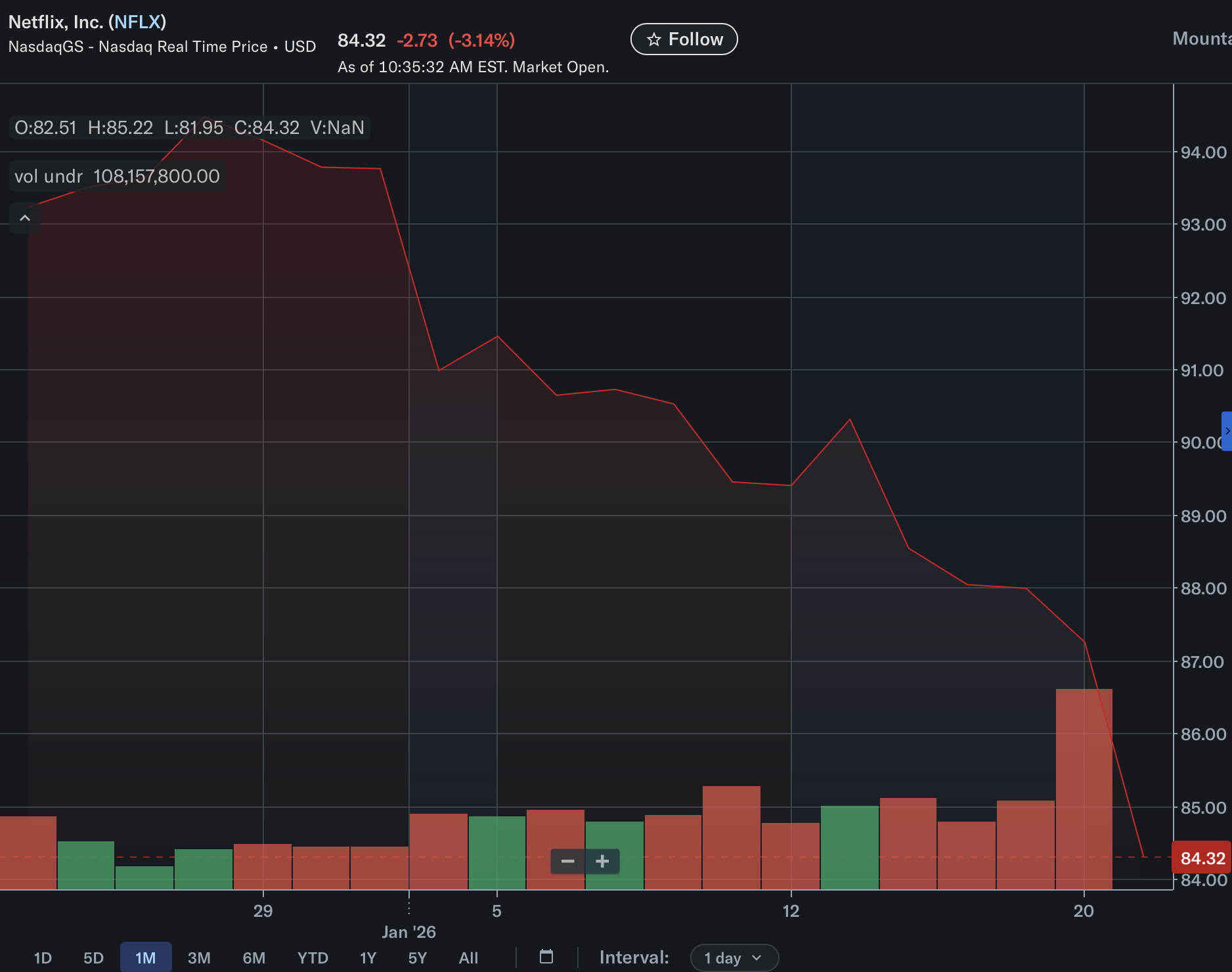
This move places the stock near the lower end of its recent range, signaling that near-term sentiment has turned defensive despite solid operating performance.
Earnings Beat Overshadowed by Deal Concerns
Netflix reported Q4 2025 results above consensus, underscoring the continued strength of its core business:
- Revenue: $12.05 billion (vs. $11.97 billion expected)
- EPS: $0.56 (vs. $0.55 expected)
- Subscribers: A record 325 million, up sharply year over year
- Ad revenue: More than doubled in 2025 to $1.5 billion
However, the market reaction suggests these positives were already priced in. Instead, investors focused on strategic and financial risks tied to Netflix’s proposed acquisition of Warner Bros. Discovery.
Warner Bros. Discovery Bid Reframes the Narrative
On January 20, Netflix revised its offer for Warner Bros. Discovery to an all-cash bid of $27.75 per share, abandoning the stock component to simplify the transaction and counter a competing bid from Paramount Skydance.
Key implications highlighted by investors include:
- Buyback suspension: Netflix will pause its share repurchase program to preserve cash, removing a key support for the stock.
- Deal costs: Management expects roughly $275 million in transaction-related expenses during 2026.
- Margin pressure: Higher content investment and integration costs weigh on near-term profitability.
If completed, the deal would significantly expand Netflix’s content empire, bringing brands such as HBO, Harry Potter, and Game of Thrones under its control—but at a substantial financial cost.
2026 Guidance Triggers Repricing
Netflix’s forward outlook further fueled the sell-off:
- Q1 2026 EPS guidance: $0.76, below analyst expectations of $0.80–$0.82
- Full-year operating margin target: 31.5%, trailing the 32.6% consensus
- Revenue outlook: $50.7–$51.7 billion, implying 12%–14% growth
While still robust, the guidance signals a slower margin trajectory as Netflix prioritizes scale and strategic dominance over near-term earnings optimization.
Bottom Line
The chart and price action suggest that Netflix’s sell-off is less about fundamentals deteriorating and more about investor unease with capital allocation and margin trade-offs. Subscriber growth, advertising momentum, and content engagement remain strong, but the Warner Bros. Discovery bid has introduced a new layer of execution risk.
In the near term, traders will be watching whether the stock can stabilize above the low-$80s region. Longer term, the debate centers on whether Netflix’s bold consolidation strategy ultimately strengthens its competitive moat, or temporarily weighs on shareholder returns while the market digests the cost.
The post Netflix Shares Slide After Earnings as Warner Bros. Bid Shifts Investor Focus appeared first on ETHNews.
