
Bitcoin mining profitability is increasingly compressing as network difficulty remains elevated and electricity costs approach $0.08 per kWh, placing multiple widely used ASIC models close to their shutdown thresholds.
Data from Antpool shows a clear divergence forming between older and next-generation miners, with only the most efficient hardware maintaining meaningful downside resilience.
This moment matters structurally because miner shutdown levels often act as indirect stress markers for the Bitcoin network, influencing hashrate behavior and, historically, local price stability zones.
Miner Shutdown Levels Cluster Around Current Price Zone
According to Antpool’s Miner Income Rank table, several popular models are now operating close to their breakeven points at current difficulty levels.
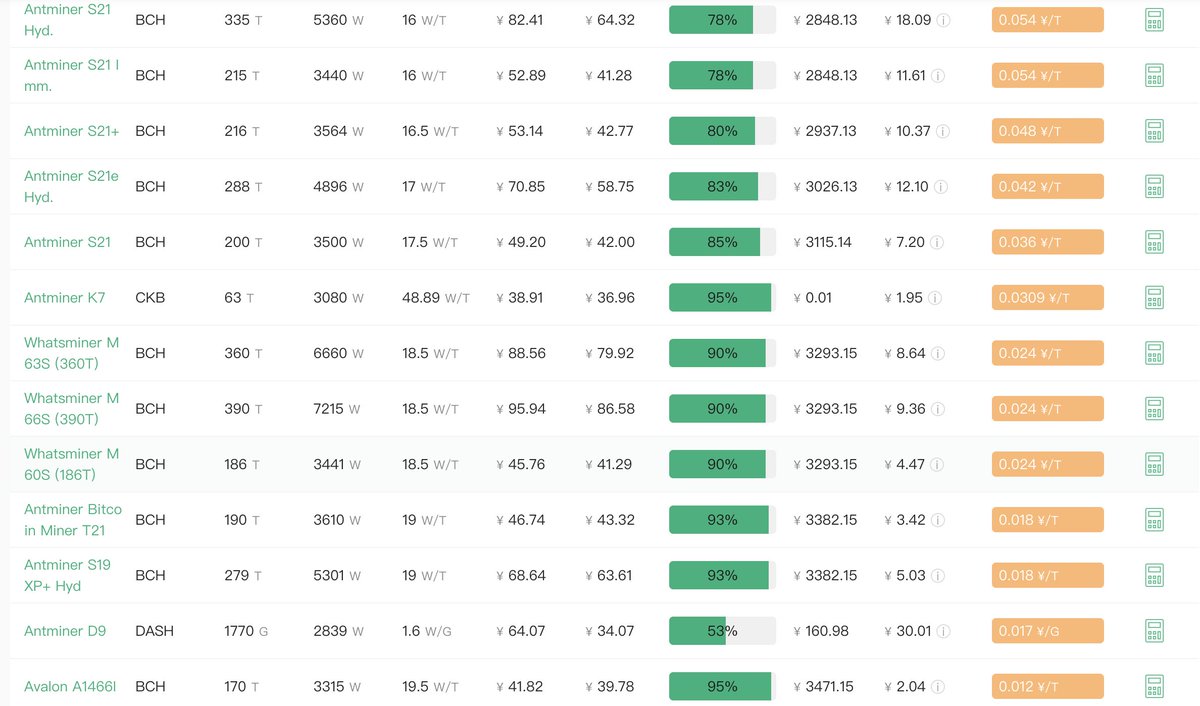
- Antminer S19 XP+ Hydro, WhatsMiner M60S, and Avalon A1466I are all approaching shutdown prices, meaning sustained Bitcoin trading below their thresholds would likely force operators to power down or operate at a loss.
- These models show shutdown sensitivity clustered in the upper $60,000 range, leaving little margin for error if price weakens further.
In contrast, the Antminer S21 series displays shutdown prices in a higher band, approximately $69,000–$74,000 per BTC, reflecting improved efficiency but also highlighting that even newer-generation hardware is no longer deeply insulated from downside moves.
High-Hashrate Models Retain Structural Advantage
The data also shows a clear separation at the top end of the efficiency curve.
High-hashrate miners such as the U3S23H and S23 Hydro remain profitable well below current market levels, with shutdown prices above $44,000 per BTC. This creates a widening operational gap between industrial-scale operators running cutting-edge hardware and smaller or legacy-focused miners.
This divergence suggests that any additional price compression would disproportionately impact mid-tier and older fleets first, rather than triggering broad-based miner capitulation across the network.
Implications for Network Behavior
When shutdown levels begin clustering near spot price, miners typically respond in one of three ways:
reducing hash contribution, upgrading hardware, or absorbing short-term losses while waiting for either price relief or a difficulty adjustment.
The Antpool data indicates that the network is entering a profitability compression phase, not yet a full capitulation phase. Hashrate pressure would likely emerge gradually rather than abruptly, particularly while the most efficient miners remain comfortably profitable.
Takeaway
Bitcoin mining economics are tightening, with multiple widely deployed ASIC models now operating near shutdown thresholds at current difficulty and power costs. While the network remains structurally supported by high-efficiency hardware, the margin of safety for mid-generation miners has narrowed significantly.
For now, the data points to selective stress rather than systemic miner distress, with any escalation dependent on whether Bitcoin price holds above the clustered shutdown zones highlighted by Antpool’s miner profitability rankings.
The post Bitcoin Mining Economics Tighten as Several ASIC Models Near Shutdown Levels appeared first on ETHNews.
